
Seasonal Alopecia in Dogs
Seasonal alopecia in dogs is a hair loss condition, most often affecting the flanks, that tends to appear in fall or winter and resolve on its own, and treatment typically involves melatonin supplementation under veterinary guidance along with monitoring the affected area for changes. The Gentle Vet in Orlando frequently sees this condition, particularly in short-coated breeds, and while it looks concerning, it’s typically not a sign of a serious health problem. This blog covers what causes seasonal alopecia, how to treat it, and when hair loss might indicate something else entirely.
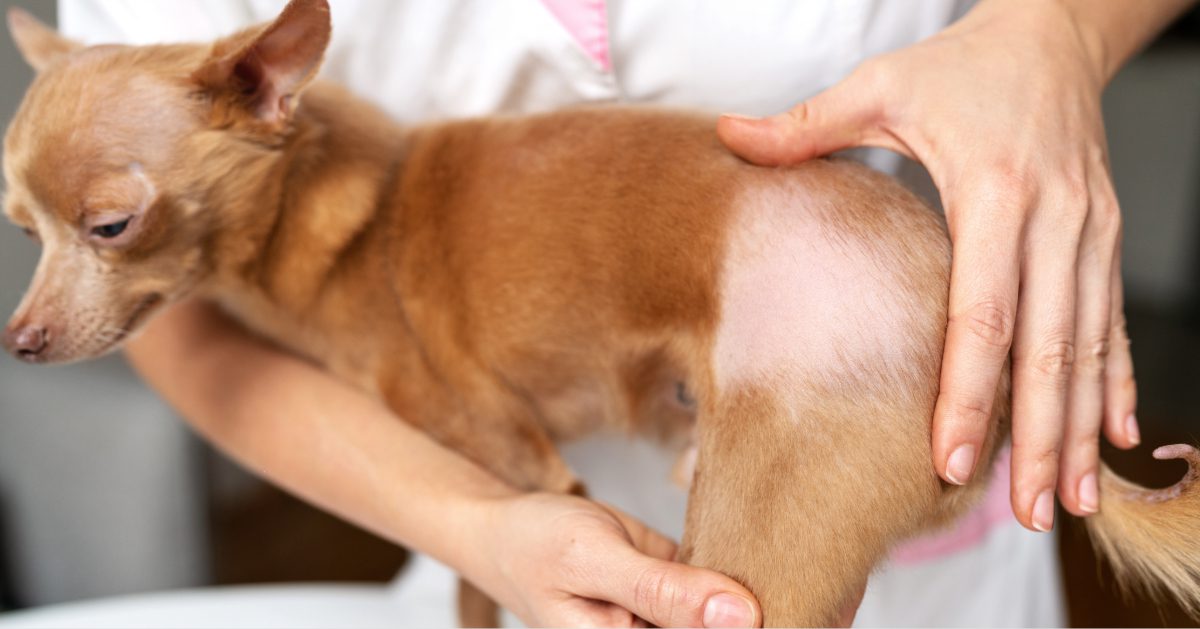
Seasonal Flank Alopecia
Seasonal flank alopecia is the most recognized form of seasonal alopecia in dogs. It typically appears as one or more well-defined patches of hair loss along the sides of the body, or flanks, without redness, itching, or irritation of the skin underneath, which helps distinguish it from other, more uncomfortable skin conditions.
Breeds Most Commonly Affected
- Boxers
- Bulldogs
- Airedale Terriers
- English Springer Spaniels
- Schnauzers
What is Seasonal Alopecia in Dogs?
Seasonal alopecia in dogs is believed to be linked to changes in daylight exposure, which affects melatonin production and hair follicle cycling. It most commonly appears in the fall and winter months, hence the name, and often resolves on its own within several months, though some dogs experience recurrence in following years. Because Orlando’s daylight patterns differ from more northern climates, local pet owners sometimes see a slightly different timeline than what’s typically described in general resources.
How to Treat Seasonal Alopecia in Dogs
Because seasonal alopecia is a cosmetic condition rather than a painful or itchy one, treatment focuses on encouraging regrowth rather than addressing discomfort. The Gentle Vet can help determine whether a dog’s hair loss pattern is consistent with seasonal alopecia or whether further testing is needed to rule out other causes that may require a different approach.
Common Treatment Approaches
- Melatonin supplementation under veterinary guidance
- Monitoring the patches for changes in size or appearance
- Ruling out other causes through diagnostic testing
- Patience, since regrowth can take several months
Alopecia in Dogs Treatment
Beyond seasonal flank alopecia, other forms of alopecia in dogs treatment depend heavily on the underlying cause. Hormonal, genetic, and immune-related alopecia all require different approaches, which is why an accurate diagnosis matters before starting any treatment plan, even when the hair loss pattern looks similar on the surface.
Questions Our Veterinarians Ask to Narrow Down the Cause
- Does the hair loss follow a seasonal pattern year after year?
- Is the underlying skin healthy, or is it irritated and inflamed?
- Is the hair loss symmetrical or isolated to one area?
- Are there other symptoms present, like changes in appetite or energy?
Distinguishing Seasonal Alopecia From Other Conditions
Seasonal alopecia can resemble other hair loss conditions, which is why a proper veterinary evaluation matters even when a case seems straightforward. Conditions like mange, ringworm, and hormonal imbalances can all present with similar patchy hair loss, but they require very different treatment approaches, and mistaking one for another can delay proper care.
Key Differences to Watch For
- Seasonal alopecia rarely causes itching or skin irritation
- Ringworm often has a circular, scaly appearance
- Hormonal alopecia tends to be more symmetrical and widespread
Will Seasonal Alopecia Come Back Every Year?
Some dogs do see the condition return in subsequent years around the same time, while others experience it only once. Tracking the pattern over multiple years can help confirm the diagnosis and set expectations for future seasons.
Signs That Point to More Than Seasonal Hair Loss
Seasonal alopecia itself isn’t an emergency, but if hair loss is accompanied by redness, swelling, open sores, or signs of pain, it’s worth having your dog examined promptly to rule out a more urgent underlying issue.
Supporting Your Dog Through the Regrowth Process
Watching your dog’s coat thin out can be worrying, especially the first time it happens. The Gentle Vet’s team can confirm a seasonal alopecia diagnosis and offer guidance on supporting healthy regrowth, so you have peace of mind while your dog’s coat returns to normal. If your dog is showing signs of patchy hair loss this time of year, call (407) 505-5678 to schedule a visit with us in Orlando. We’ll help you understand what’s happening and what to expect next.
Recent Posts
About Us
At The Gentle Pet in Orlando, FL, we provide gentle, personalized veterinary care that supports each pet’s comfort, health, and quality of life. As a privately and family-owned practice, we take the time to help pets and their people feel cared for.